
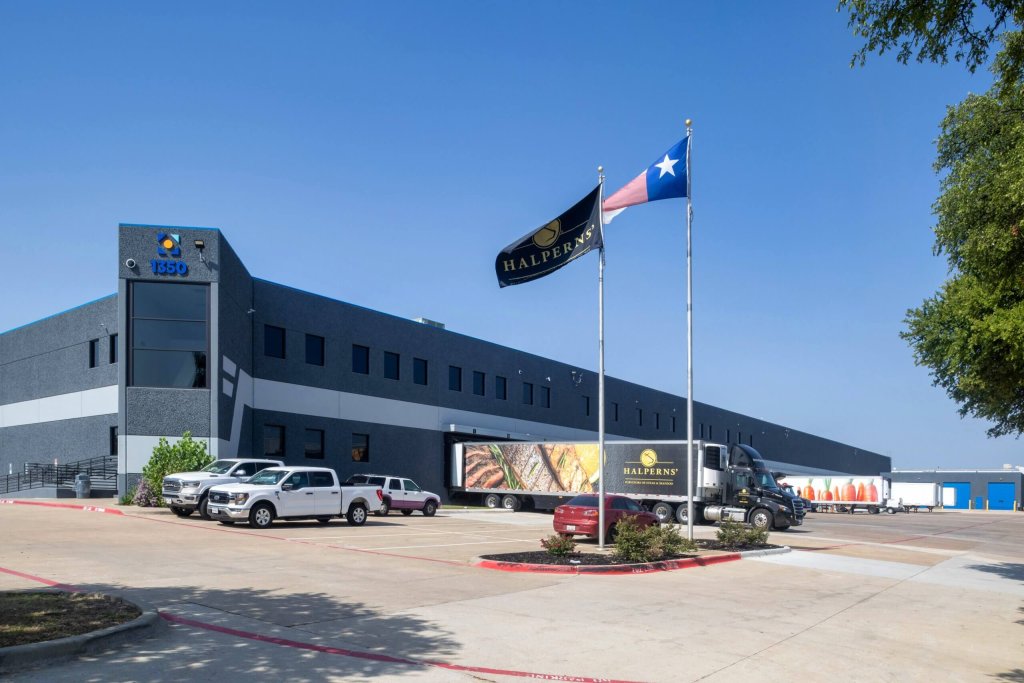
In the rapidly evolving industrial market, the ability to pivot from a standard cold storage shell to a highly specialized, USDA-compliant processing environment is a critical measure of performance and agility. When Halperns’ selected a Dallas area facility for their new steak and seafood operations, which Alston Construction was currently renovating and updating, the Alston team was tasked with executing a massive technical overhaul. Through strategic contract structuring, regulatory alignment, and logistical sequencing, the team transformed the facility while ensuring absolute operational continuity during the client’s relocation.
Halperns' Steak and Seafood | Dallas, Texas
The Strategic Pivot: Contractual Agility and Phasing
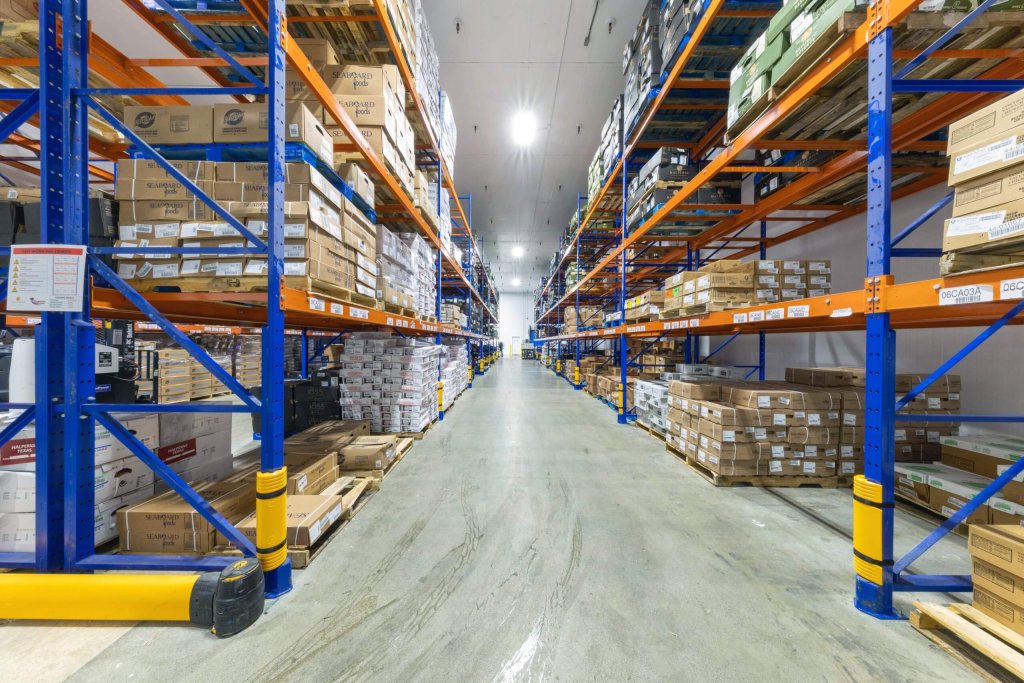
The transition from a standard cold storage shell to a state-of-the-art food processing facility requires careful schedule management. To ensure the scope changes did not disrupt the original timeline, Alston strategically structured the Halpern’s tenant buildout as a separate, dedicated contract. This approach provided the flexibility needed to execute complex underground drainage and electrical upgrades simultaneously with ongoing site activities. Because the client had already occupied portions of the building for Phase 1 freezer and cooler operations, the installation of these new services required precision to guarantee those active operations remained entirely undisturbed during the build-out.
Engineering the Environment for Stringent Compliance
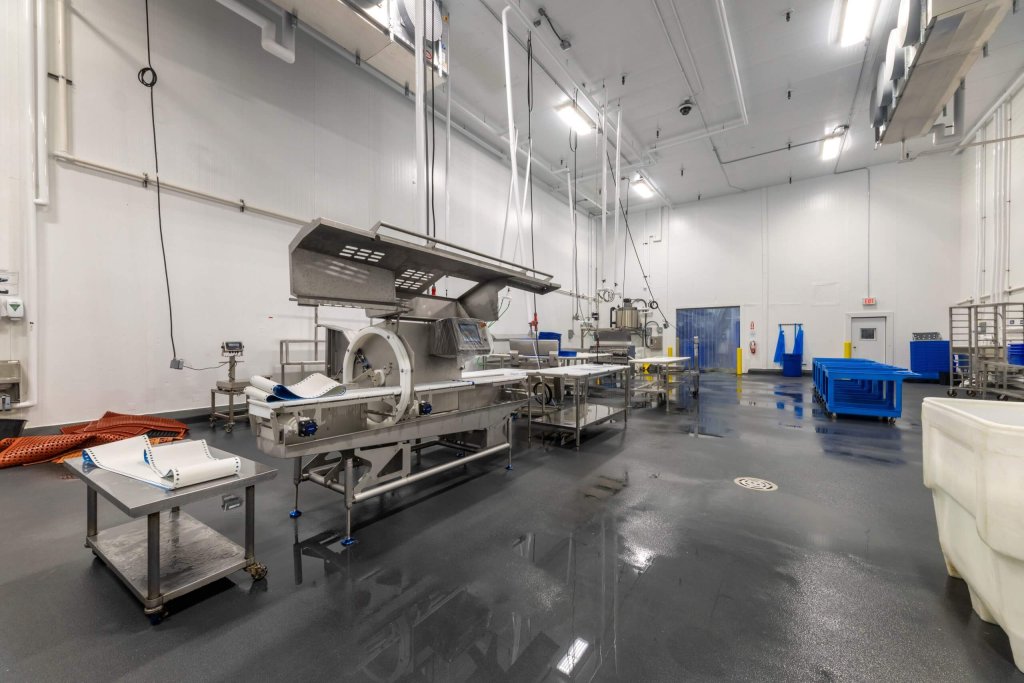
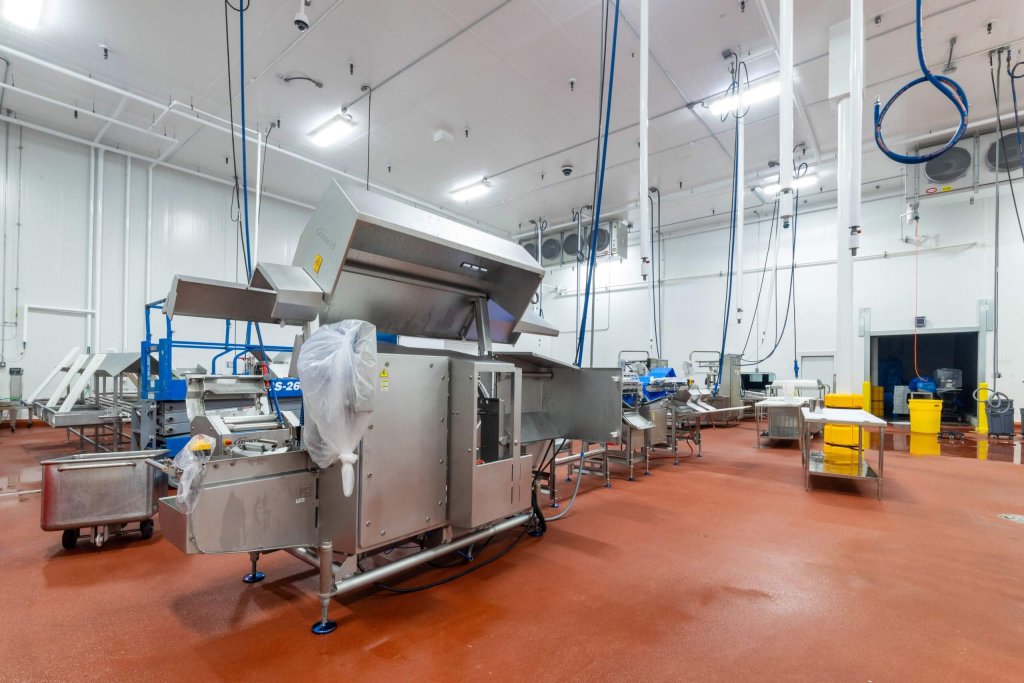
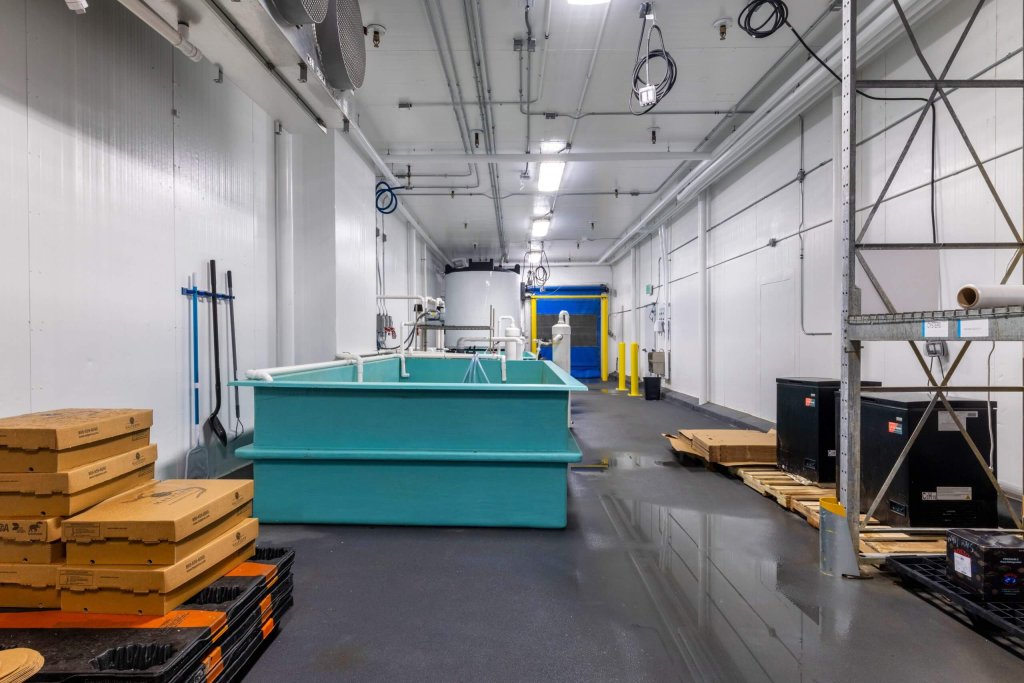
Meat and seafood processing requires an uncompromising approach to climate control and sanitation. To support these operational needs, the team implemented upgrades to the facility’s core infrastructure. Heavy wash-down environments introduce significant moisture loads and require specialized handling of wastewater. To address this, Alston installed an extensive underground stainless steel trench drainage system that feeds directly into a newly constructed grease interceptor network. Supporting these specific processing operations also required a complete electrical service upgrade and the implementation of water loops, including an advanced chilled and ozonated water system. Simultaneously, the facility’s HVAC and refrigeration systems were significantly enhanced. A dedicated make-up air system was introduced to manage wash-down humidity and introduce positive pressure to the processing areas, while specialized refrigeration units were installed to maintain exact, varied temperatures across distinct operational zones.
Designing for Absolute Food Safety
Beyond the hidden infrastructure, the physical envelope of the processing areas was engineered specifically for USDA compliance and optimal food safety.
The team constructed the processing zones utilizing sloped urethane floors paired with coved curbs at all wall junctions to eliminate standing water and bacteria-harboring crevices. Washdown high-speed doors and automated foaming systems were integrated at critical doorways to proactively sanitize foot traffic, while food-safe fittings and specialized insulation were utilized throughout the space to meet the highest industry standards.
Orchestrating Operational Continuity
The true measure of success for this project lay in the transition from a cold storage shell to a tenant buildout. Halperns’ required a complete relocation of their existing Arlington operations to the new Dallas area facility over a single weekend, with the strict mandate of zero lost production days. Recognizing the complex regulatory landscape of food processing, Alston’s project team proactively scheduled multiple pre-inspection walkthroughs with the City’s Environmental and Health Department early in the project lifecycle. This strategy ensured all systems met compliance standards well before the final transition.
During the critical relocation weekend, specialized electrical and plumbing teams worked in round-the-clock synchronization. They expertly installed, connected, and calibrated the relocated processing equipment within a tightly compressed window. Because the groundwork for compliance had been laid weeks in advance, the City issued the Temporary Certificate of Occupancy (TCO) with no major delays.
Outcomes and Metrics of Success
Halperns’ resumed full production in their new, world-class facility the week after the move with limited disruption to operations and production schedule. The Halperns’ project stands as a testament to the value of proactive problem-solving and precision engineering. By successfully navigating complex phasing, stringent regulatory requirements, and an aggressive relocation schedule, Alston Construction delivered an exceptional facility on time and within budget. The project culminated in a seamless transition that protected the client’s production revenue, all while maintaining a flawless record of zero safety incidents across every phase of the build.